Stop Your Lab Glass From Shattering: The Secret is in the IR
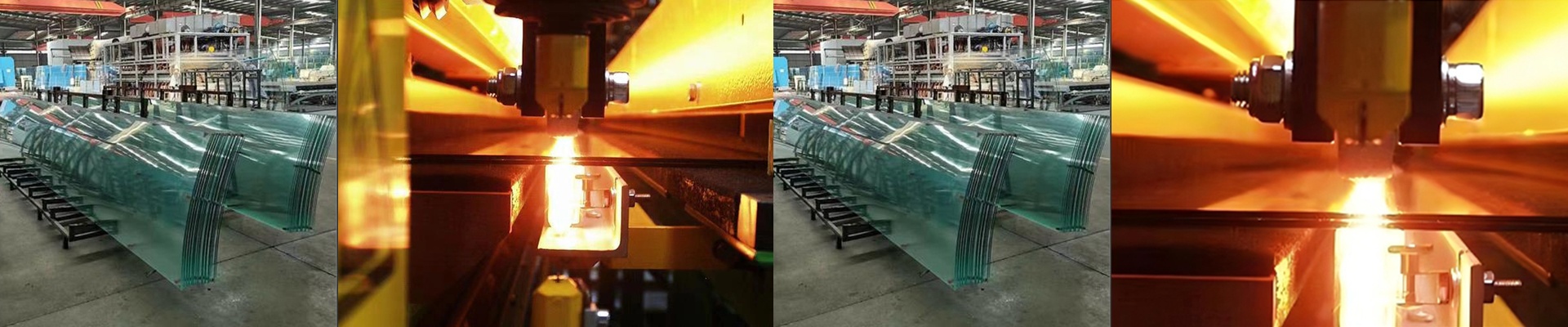
Ever had a borosilicate flask just… give up on you? You’re in the middle of a run, maybe there’s a slight temperature spike or you bump it against the bench, and crack. It’s frustrating. But usually, the problem didn’t start in the lab—it started during manufacturing. When glass cools too fast or unevenly, it traps microscopic tension inside the walls. We call these internal stresses, and they’re basically ticking time bombs. To stop this, we use continuous annealing heaters with infrared (IR) elements to let the glass relax properly.
The Obsession with 0.1°C
Here is the tricky part: glass has a very narrow window for annealing. If you keep it too hot, the piece loses its shape and sags. If it drops too low, you lock in those stresses we’re trying to avoid. Most standard controllers (PID loops) tend to “overshoot”—they swing too high, then too low. That’s why we aim for a 0.1°C tolerance. It sounds like overkill until you see the results. We use shortwave IR because it doesn’t waste time heating up the air around the glass. It goes straight into the wall of the vessel. By pairing that IR output with a high-precision thermocouple, we can keep the glass exactly where it needs to be. No “cold spots,” no surprises.
It’s a Balancing Act
You can’t just crank up the power and call it a day. If you use a lamp that’s too powerful for the size of the flask, you’ll cook the surface while the core stays cool. That creates a thermal gradient, which is exactly what we’re trying to prevent. You have to find the sweet spot between the lamp’s wattage and how fast the conveyor is moving. We usually go with quartz-halogen tubes. Why? Because they’re fast. They ramp up and down almost instantly, which is the only way to actually hit that 0.1°C stability.
Making it Work in the Real World
When you’re actually wiring this thing up, the power supply is usually where things go sideways. If you have voltage drops or flicker, your temperature readings will jump around, and your precision vanishes. To fix that, use a dedicated SCR (Silicon Controlled Rectifier) to keep the power steady. And one last thing: don’t forget the fans. IR housings get hot. If you don’t have the right cooling for the electronics, the components will drift, and you’ll lose that tight control you worked so hard to get.